Coloring Therapy for Anxiety & Stress Relief — The Science Behind Why It Works
You might think of coloring as a children's activity, but coloring therapy has become one of the most accessible and effective stress-relief tools for adults and teens. And the science backs it up.
In this article, we'll explore why coloring works as therapy, what the research says, and how you can start using it today.
The Science Behind Coloring Therapy
How Coloring Affects Your Brain
When you color, several things happen in your brain simultaneously:
- Amygdala activity decreases — The amygdala is your brain's "fear center." Coloring's repetitive, focused nature signals safety, reducing the fight-or-flight response.
- Prefrontal cortex engages — The planning and decision-making area activates as you choose colors and plan your approach, replacing anxious thoughts with creative ones.
- Default Mode Network quiets — This is the brain network responsible for rumination and worry. When you're focused on coloring, this network goes quiet — similar to meditation.
- Dopamine releases — Completing sections and seeing colors fill the page triggers small dopamine rewards, creating a positive feedback loop.
What Research Shows
A landmark 2005 study by researchers at Knox College found that coloring mandalas and geometric patterns significantly reduced anxiety levels compared to free-form coloring or no coloring at all. The structured nature of these designs was key — they provide enough complexity to engage the mind without causing frustration.
More recent research has confirmed these findings:
- A 2017 study in Art Therapy found that just 20 minutes of coloring reduced anxiety and improved mood in university students
- 2020 research in the British Journal of Occupational Therapy showed coloring was as effective as some other mindfulness interventions for reducing stress
- A 2021 systematic review concluded that creative activities including coloring showed "moderate evidence for reducing anxiety symptoms"
Who Benefits from Coloring Therapy?
Adults with Anxiety
If you experience general anxiety, social anxiety, or work-related stress, coloring provides a low-pressure, non-verbal outlet. Unlike journaling or talk therapy (which are also valuable), coloring doesn't require you to articulate your feelings — you just *feel* them while your hands stay busy.
Teens Under Academic Pressure
The pressure of exams, social media, and future uncertainty makes teens particularly vulnerable to stress. Coloring offers a judgment-free zone — there's no "right answer" and no grade.
Elderly Individuals
Coloring helps maintain cognitive function and fine motor skills in older adults while providing a calming activity that reduces feelings of isolation and depression.
People in Recovery
Many addiction recovery programs include art therapy components. Coloring provides a healthy coping mechanism — something to do with your hands and mind during moments of craving or anxiety.
Healthcare Workers
After the pandemic highlighted the mental health toll on healthcare professionals, many hospitals introduced coloring stations in break rooms as a quick stress-relief tool.
Best Types of Coloring for Stress Relief
Not all coloring is equally therapeutic. Here's what works best:
Mandalas
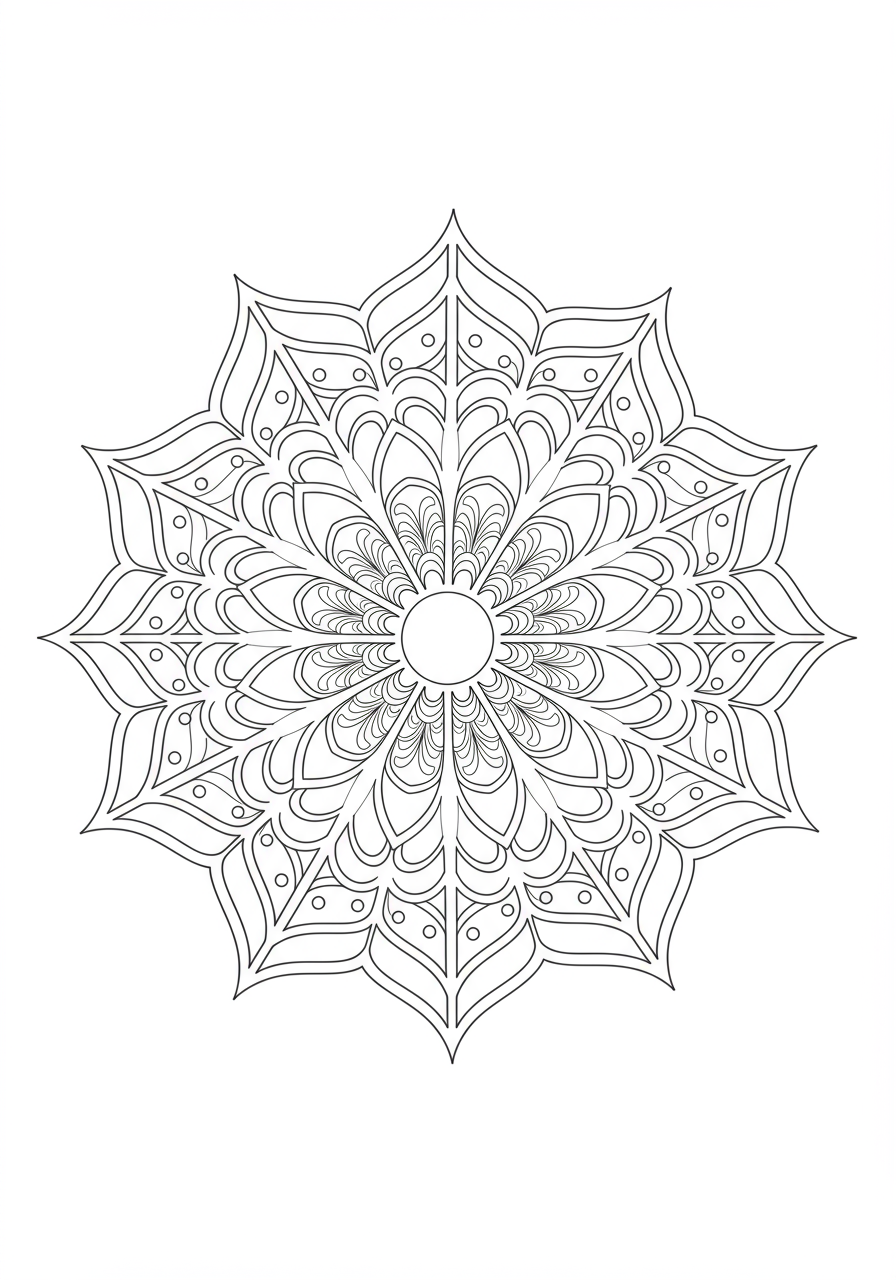
Mandalas — circular, symmetrical designs — are the gold standard for therapeutic coloring. Their repetitive patterns and geometric precision create a meditative rhythm. The original Knox College study specifically found mandalas to be more effective than other types.
Browse our free mandala coloring pages for printable designs.
Nature Scenes
Flowers, trees, landscapes, and ocean scenes connect you with nature even when you're indoors. Nature-themed coloring has been shown to lower blood pressure and produce calming effects similar to actually being in nature.
Explore our nature coloring pages collection.
Geometric Patterns
Abstract geometric designs — tessellations, Celtic knots, zentangle patterns — provide structure without representing anything specific, allowing your mind to fully disconnect from concrete worries.
What to Avoid for Stress Relief
- Overly complex designs — If a page is too detailed, it can cause frustration instead of relaxation
- Time pressure — Don't set a deadline for finishing a page
- Perfectionism — There's no "wrong" color choice. This is about the process, not the result.
How to Start a Coloring Therapy Practice
Setting Up Your Space
Create a dedicated coloring space that signals "relaxation" to your brain:
- Comfortable seating — A supportive chair or floor cushion
- Good lighting — Natural light is best; avoid harsh fluorescents
- Minimal distractions — Put your phone in another room or on silent
- Optional: calming music — Instrumental music or nature sounds enhance the experience
Choosing Your Tools
- Colored pencils — Best for detailed work and blending. Less mess than markers.
- Gel pens — Smooth, glide easily, and come in beautiful metallic and pastel colors
- Fine-tip markers — Vibrant colors, but can bleed through thin paper
- Crayons — Don't underestimate them! The waxy texture and childhood associations add to the comfort factor
Recommended Routine
- Start with 10-15 minutes — Gradually increase as it becomes habit
- Same time daily — Morning to start the day calm, or evening to wind down
- No expectations — You don't need to finish a page or make it look "good"
- Breathe deeply — Take 3 deep breaths before you start
- Notice your feelings — Not to analyze them, just to acknowledge them
Coloring vs. Other Stress-Relief Methods
| Method | Accessibility | Cost | Evidence Level | Time Needed |
|---|---|---|---|---|
| Coloring | ✅ Very high | Free-Low | Moderate | 10-20 min |
| Meditation | 🟡 Medium (needs practice) | Free | Strong | 10-30 min |
| Exercise | 🟡 Medium (needs space) | Free-Moderate | Strong | 20-60 min |
| Journaling | 🟡 Medium (needs words) | Free | Moderate | 10-20 min |
| Yoga | 🟡 Medium (needs instruction) | Free-Moderate | Strong | 30-60 min |
Coloring's greatest advantage is its low barrier to entry. You don't need to learn a technique, find a class, or push through physical discomfort. You just pick up a pencil and start.
Free Therapeutic Coloring Pages
Ready to try coloring therapy? Start with these resources:
- Mandala Coloring Pages — Best for anxiety relief
- Nature & Flowers — Calming natural scenes
- AI Generator — Create personalized therapeutic pages (try: "peaceful zen garden with koi fish" or "abstract flowing waves pattern")
Final Thoughts
Coloring therapy isn't a replacement for professional mental health treatment when it's needed. But as a daily wellness practice, it's remarkably effective, completely free, and available to anyone with a pencil and paper.
The next time you feel anxiety building, try reaching for crayons instead of your phone. Your brain will thank you. 🎨
Written by Sarah Chen
Sarah is an art education specialist and the founder of ColorJoy Prints. With a background in child development and over 5 years of experience in educational content, she creates evidence-based resources that make learning fun through creative activities.