Orangutan Swinging from Branch Free Printable Coloring Page
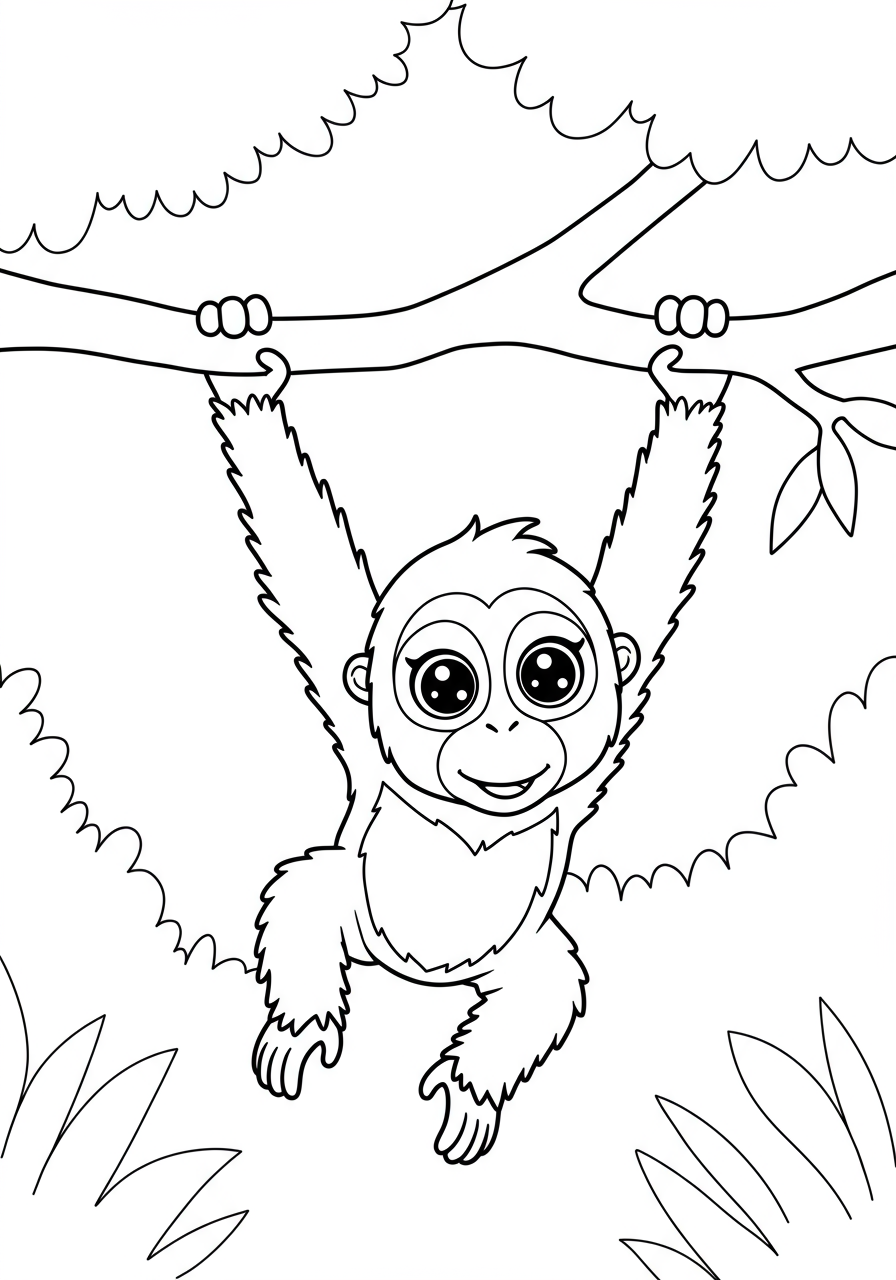
Get ready for a wild adventure with our amazing Orangutan Swinging from Branch coloring page! Orangutans are incredible animals known for their bright reddish-brown fur and their amazing ability to swing gracefully through the trees of the rainforest. This coloring page invites you to bring one of these gentle giants to life with your favorite colors. Imagine the rustle of leaves and the warm jungle air as you fill in every detail of this playful orangutan.
About This Coloring Page
This delightful coloring page features a friendly orangutan, hanging on tightly to a sturdy tree branch, ready for its next swing! The design is easy for young children to color, with clear lines and large areas, making it perfect for little hands to practice their coloring skills. You'll find the orangutan's expressive face and long arms clearly outlined, along with the branch and some simple leaf details to give a hint of its rainforest home. It’s a wonderful way to introduce children to the beauty of wildlife and the importance of nature.
Coloring Tips
To make your orangutan truly shine, start by choosing a lovely shade of orange, reddish-brown, or even a mix for its fur. You can use different browns and greens for the tree branch and leaves. Don't forget the background! A light blue or yellow could represent a sunny sky peeking through the canopy, or use darker greens to show more dense jungle foliage. For added texture, try coloring the fur with short, feathery strokes, and the wood of the branch with longer, flowing lines. Remember, there's no right or wrong way to color – let your imagination swing free!
Fun Facts
Did you know that the word "orangutan" means "person of the forest" in the Malay language? These fascinating primates certainly look a bit like people, with their intelligent eyes and expressive faces. Orangutans spend almost all of their lives in trees, rarely coming down to the forest floor. They have incredibly long, strong arms that can stretch up to 7 feet (over 2 meters) to help them swing from branch to branch, a movement called brachiation. They primarily eat fruit, but also enjoy leaves, bark, and insects. They are only found on the islands of Borneo and Sumatra in Southeast Asia and are an endangered species, which means they need our help to protect their homes.