Volcano Eruption Diagram Free Printable Coloring Page
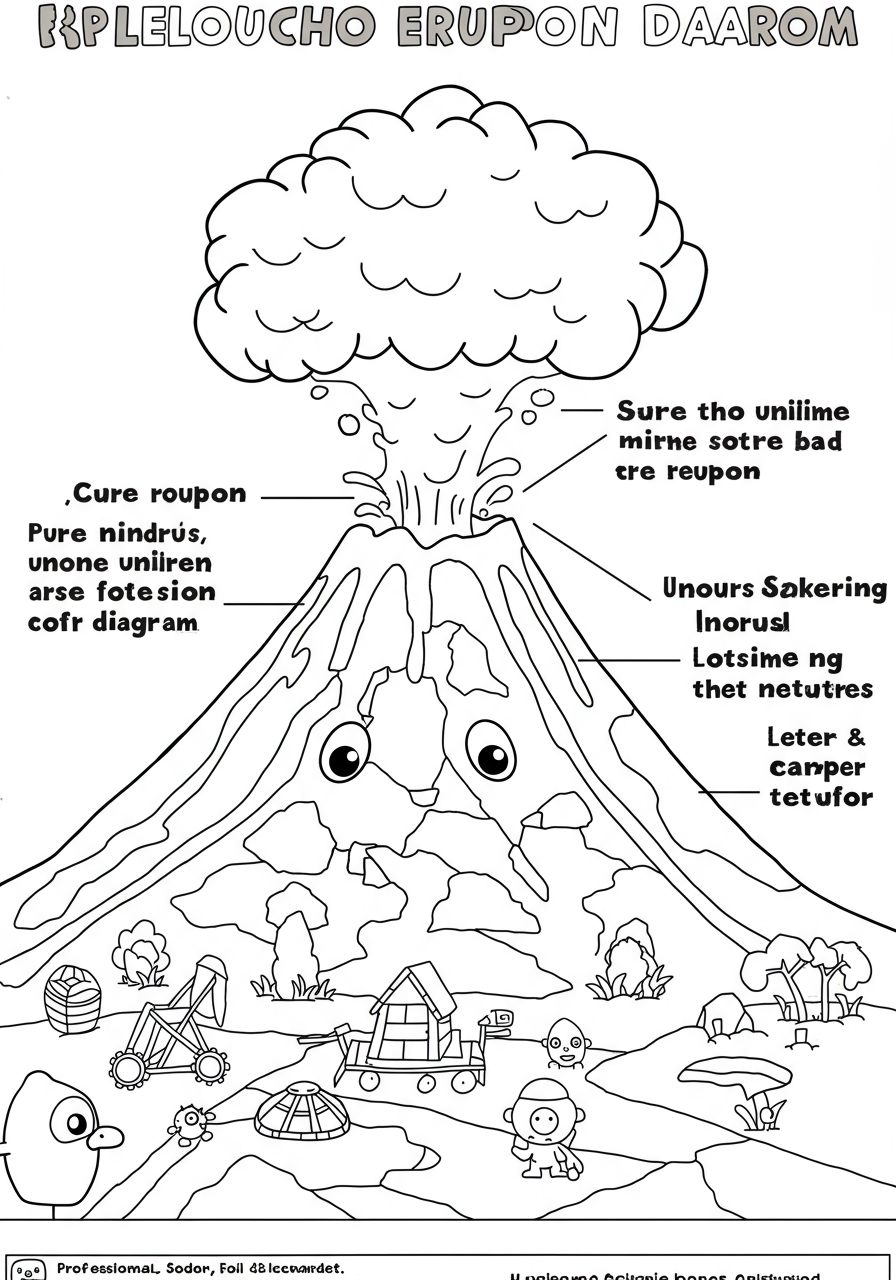
Get ready for an exciting adventure into the heart of our planet! Volcanoes are incredible natural wonders that can be both powerful and beautiful. Have you ever wondered what happens inside a volcano when it erupts? Our free printable Volcano Eruption Diagram coloring page is the perfect way to explore this fascinating science up close and personal, right from your home!
About This Coloring Page
This special coloring page features a clear and easy-to-understand cross-section diagram of a volcano during an eruption. You'll see all the important parts labeled or clearly depicted, like the fiery magma chamber deep underground, the vent where the molten rock travels, the crater at the top, and the spectacular ash cloud rising into the sky. You'll also get to color the flowing lava as it makes its way down the volcano's sides. This design is perfect for young explorers to learn how volcanoes work in a fun, visual way. It's simplified to make learning accessible and enjoyable for kids, making it a great resource for parents and teachers.
Coloring Tips
Bring your volcano diagram to life with a burst of color! Think about the powerful forces at play. For the magma and lava, use vibrant reds, oranges, and yellows to show just how hot they are. The ash cloud can be shades of gray, black, and even some dark purples to give it a smoky, dramatic effect. Don't forget the volcano's cone itself – you can color it in earthy browns, greens, or even rocky grays. Feel free to add some blue for the sky or green for any surrounding trees or land. There are no wrong colors when you're exploring your creativity!
Fun Facts
Did you know that the super-hot, melted rock *inside* the Earth is called magma? When it erupts and flows out onto the surface, it changes its name to lava! Volcanoes can create new land, like the Hawaiian Islands, and their ash can even make the soil super fertile for plants to grow. There are different types of volcanoes too, like shield volcanoes that are wide and gently sloping, or stratovolcanoes that are tall and cone-shaped, just like the one in our diagram! Most volcanoes form along the edges of giant plates that make up the Earth's crust, where they push against each other.